
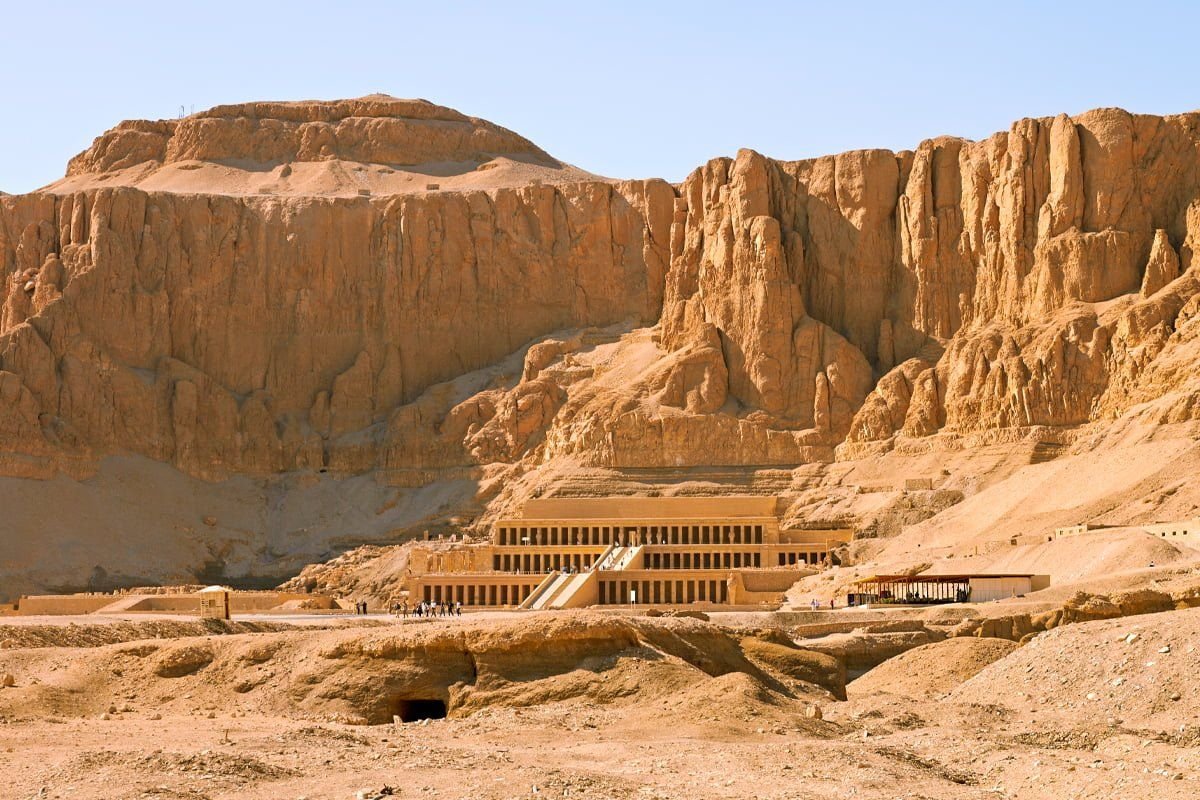
Hatshepsut Temple stands at Deir el-Bahari on Luxor’s West Bank. Its terraces and columned fronts rise towards the limestone cliffs, making it a different experience from the enclosed courts of Karnak or Luxor Temple. It is commonly combined with the Valley of the Kings and the Colossi of Memnon on a West Bank excursion.
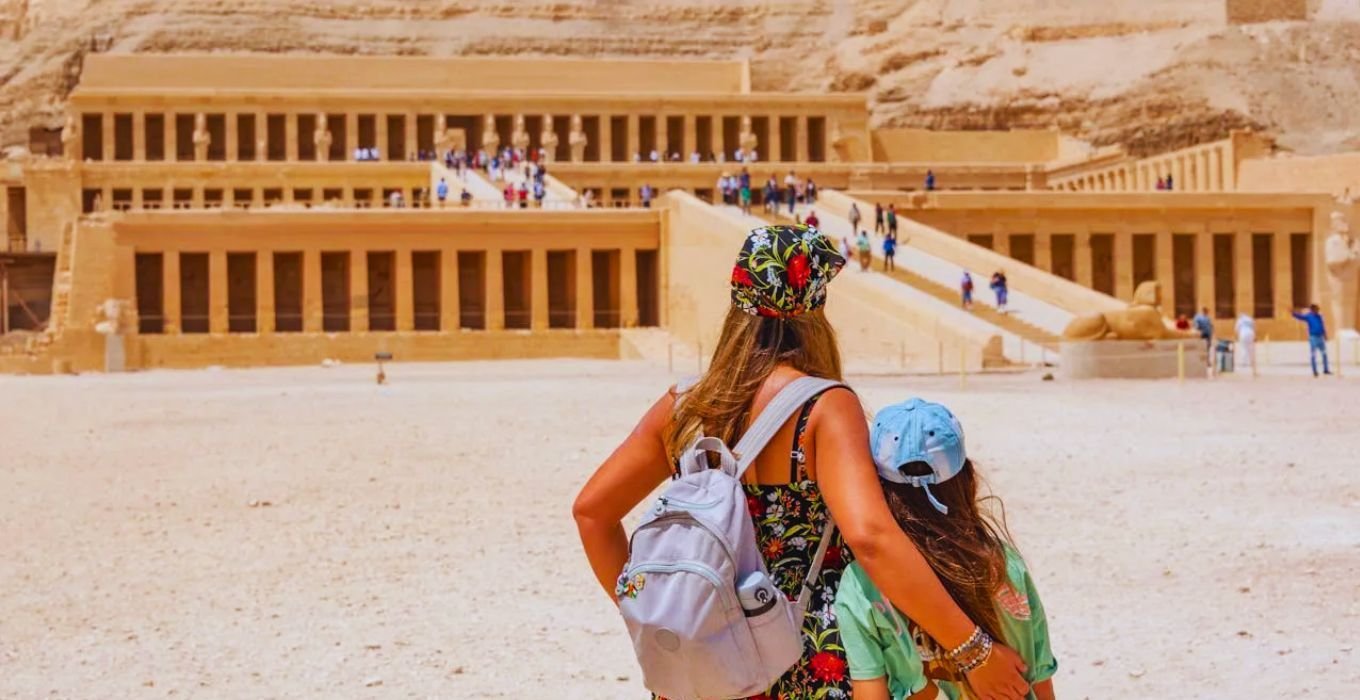
What is Hatshepsut Temple?
The temple was built for Hatshepsut, the queen who ruled as pharaoh during the Eighteenth Dynasty. Egypt’s Ministry of Tourism and Antiquities dates her reign to about 1473–1458 BC and identifies the monument as Djeser-djeseru. It was a mortuary temple, where the ruler’s cult continued after death, rather than the tomb itself.
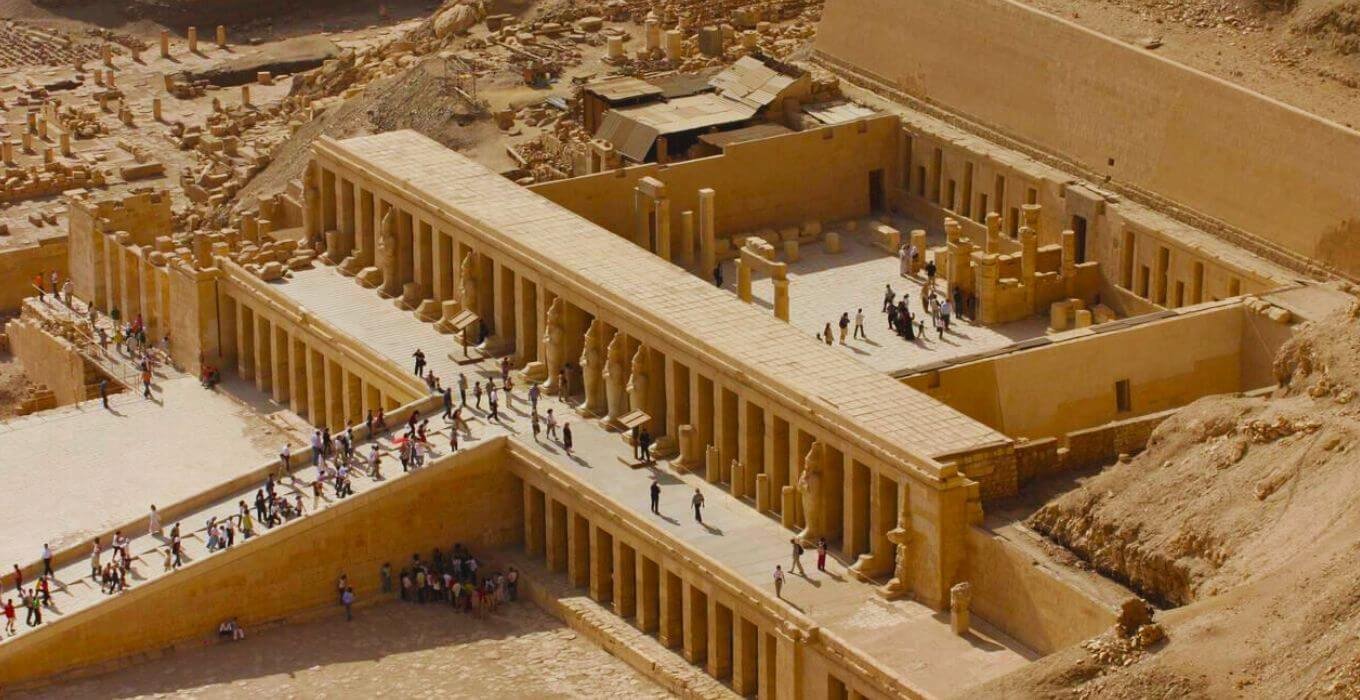
The Ministry describes three levels with colonnades and names Senenmut as the designer. The complex also includes spaces associated with Amun, Hathor, Anubis and Hatshepsut’s father, Thutmose I. These details help explain why the building is more than an architectural backdrop: its layout brought royal memory and religious worship together.
Read the Ministry’s Hatshepsut Temple description.
What to look for during the visit
The terraces, ramps and cliff setting
Begin with the view from the approach, where the horizontal lines of the terraces meet the vertical cliff face. As you move through the accessible areas, look back towards the lower levels to understand the building’s scale. The ramps are part of the experience, so the route you take matters as much as the photograph from the entrance.
Royal statues and the connection with Karnak
The temple’s statues represent Hatshepsut through the visual language of kingship. The Metropolitan Museum explains that the upper sanctuary was dedicated to Amun-Re, whose principal sanctuary was at Karnak across the river. During the Beautiful Feast of the Valley, the god’s image travelled to the West Bank in a ceremonial barque. This connection gives context to visiting both monuments during a Luxor stay.
The Met’s explanation of Hatshepsut’s temple statues and festival setting.
How to include the temple in a Luxor day
The practical comparison is between a West Bank day and a combined East-and-West-Bank day. A West Bank excursion groups Hatshepsut Temple with the Valley of the Kings and the Colossi of Memnon. Adding Karnak on the East Bank creates a longer programme with more transfers and less time available at each stop.
Our private West Bank tour describes the West Bank combination. The Luxor day-tour selection also includes other arrangements. Compare the actual stops rather than assuming that every excursion called “Luxor” covers the same places.
Visiting during a Nile cruise
Check your cruise’s daily itinerary before booking another temple excursion. Hatshepsut Temple is already included in the sightseeing programme of several Nile cruises. The visit might be scheduled before sailing, on a Luxor day or on the final day, depending on the programme. An early onward flight can affect how much of that last day is available.
Tickets, opening information and preparation
Use the official visitor information for current opening arrangements and ticket details. Do not use an old dollar conversion as a fixed entrance price. Site admission and the price of transport or guiding are different items; the inclusion list for your chosen excursion explains which services are covered.
Comfortable walking shoes, sun protection and water are practical choices for an open archaeological site. Tell the team before booking if stairs, ramps or extended walking affect your plans, so the visit route and transport can be discussed. Do not assume that a vehicle transfer removes the walking within the temple.
A visual introduction to the temple
Questions about visiting Hatshepsut Temple
Is the temple on the same bank as Karnak?
No. Hatshepsut Temple is on the West Bank, while Karnak is on the East Bank. A programme combining them needs time to travel between the two sides.
Is Hatshepsut Temple the same attraction as the Valley of the Kings?
No. They are separate West Bank sites and separate stops on a combined excursion. The temple is a mortuary monument; the Valley of the Kings is a royal burial area.
Can I combine this visit with a Nile cruise?
Yes, where the confirmed cruise programme includes the West Bank visit. Check the existing sightseeing and your transfer times first, so you do not book the same excursion twice.
Historical references and travel guidance checked on 30 October 2026. Booking services and admissions depend on the selected excursion and written confirmation.